
Odense, Denmark · English pages
Short movement breaks for desk-heavy days
Editorial ideas for people in Denmark who want simple, low-intensity movement between tasks—not a treatment plan and not a substitute for professional care. Pick one or two breaks when it suits you; skip anything that does not fit your day.
Request the free cue sheet (PDF)
Optional mailing list for printable reminders only—no fees, no products sold on this page. Any marketing beyond the requested PDF would require a separate opt-in under Danish rules. You can unsubscribe or request deletion anytime (GDPR); see our Privacy Policy.
Breath as architecture
Ribcage and breath space without the incense requirement
You do not need a special cushion to invite ribs to move. These drills favor nasal breathing when comfortable, and they pair well with the desk and standing pages when you want the middle of your torso to feel less like a locked trunk.
Lateral expansion first
Hands on ribs, not a performance
Sit or stand tall, fingers resting on the lower side ribs without squeezing. Inhale so the ribs widen into the fingers like gentle bellows; exhale and let them ease inward without collapsing the spine forward.
Repeat eight cycles at a pace slower than your hurry. If you yawn, let it happen—nervous systems sometimes reset that way. Avoid forcing maximal inhales; the goal is coordination, not volume records.
Notice whether one side feels less willing to participate. Stay curious: often the writing hand side is busier in life and benefits from patient repetition rather than aggressive pushing.
Diaphragm-friendly pacing
Longer exhale, softer inhale
Try inhaling for a count of four and exhaling for six, only if it stays strain-free. If counting feels too rigid, use a short phrase instead: inhale during “I see the canal,” exhale across “boats return quietly home.” Adjust wording to your neighbourhood landmarks.
Some people find slower exhales relaxing; others do not—both are normal. Stop if you feel dizzy; return to normal breathing and hydrate.
- Minute one: lateral rib hands as above.
- Minute two: add whisper-long exhale through pursed lips as if cooling tea.
- Minute three: release hands, let shoulders roll back once, done.
Visual breathing room
Paper lantern imagination
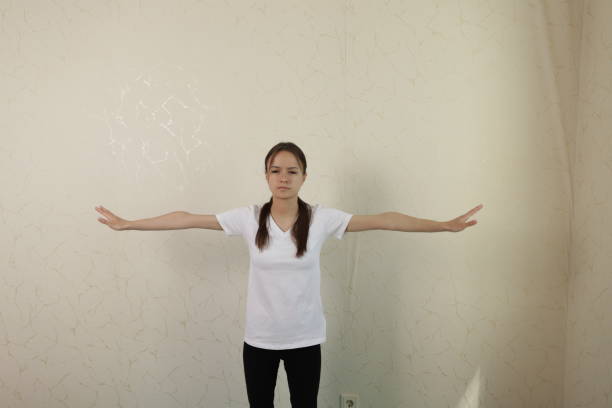
Picture a paper lantern behind your sternum expanding on inhale and softly dimming on exhale—corny, yet useful for some brains that think in pictures. Keep collarbones wide without hiking shoulders skyward.
Pair the image with a slow walk down a hallway if you have five meters free; coordination of legs and ribs can feel harmonious after long sitting.
What studies hint
Breath drills in workplace pilots
Some workplace wellness pilots combine short breathing protocols with movement prompts. Outcomes in self-reported stress or comfort vary by workplace culture and measurement tools, so we describe trends, not universal outcomes.
In pilot studies, some participants described paying more attention to how they sat after short breathing segments; that is self-report in research settings, not a prediction for you. Use these pages as invitations to experiment gently.
- Seek peer-reviewed papers if you want citations beyond this conversational summary.
- Group classes can add accountability; solo practice adds flexibility.
FAQs
Breath questions we welcome
Nasal breathing is a gentle default when passages are clear. If you are congested, blend mouth and nose without guilt—the body prioritizes oxygen first, poetry second.
Subtle lateral rib moves while holding a strap are possible. Avoid large arm motions in crowded Fyn buses; courtesy still rules.
Shift attention to sound outside the window or texture of your socks. Breath work should feel optional and kind; skip drills that tighten your chest emotionally.